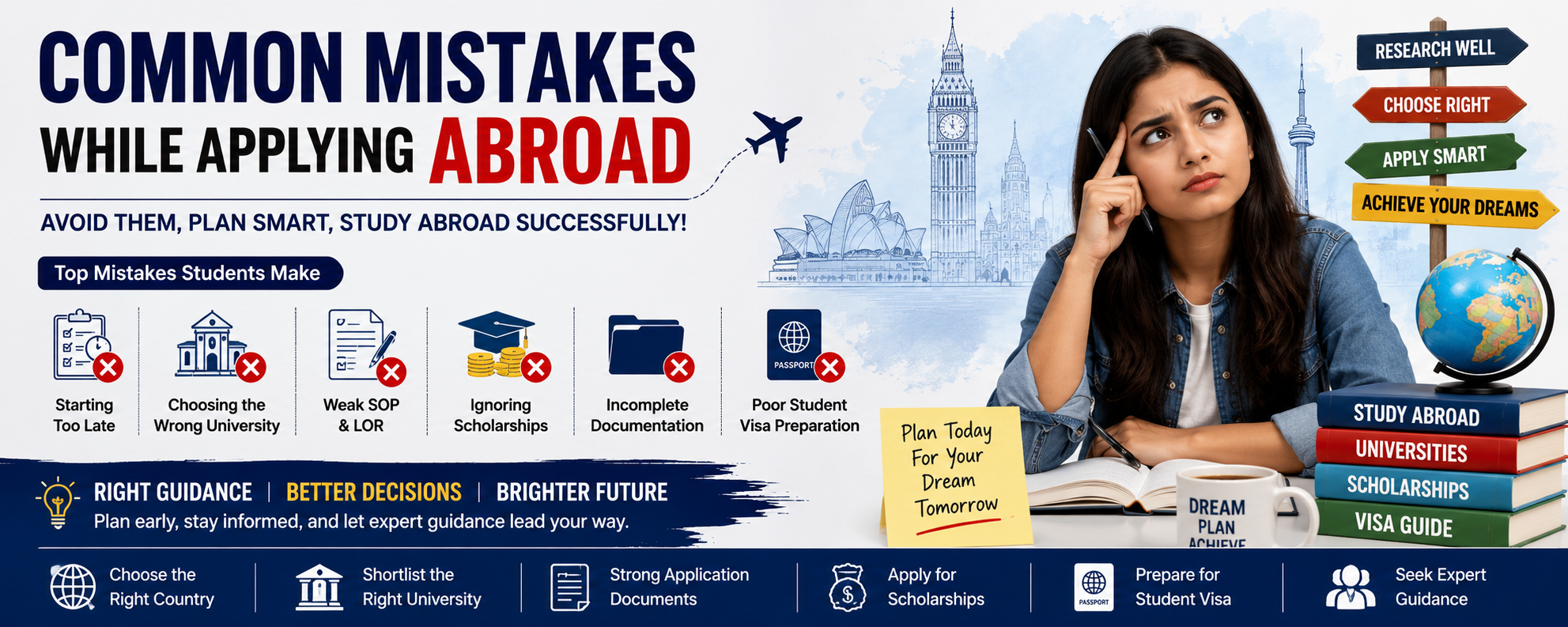
Common Mistakes While Applying to Study Abroad and How to Avoid Them
Studying abroad is a life-changing decision that opens doors to quality education, global career opportunities, and personal growth. However, many students unknowingly make mistakes during the application process that can lead to admission rejections, visa delays, or unnecessary expenses.Whether you are planning to study abroad from India in Canada, Australia, the UK, the USA, Germany, or another destination, avoiding these common mistakes can significantly improve your chances of success.
In this guide, we'll discuss the most frequent mistakes students make while applying to international universities and practical ways to avoid them.
1. Starting the Application Process Too Late
One of the biggest mistakes students make is delaying their preparation.
Many universities begin accepting applications months before the intake. Waiting until the last minute can limit your university choices, reduce scholarship opportunities, and create unnecessary stress.
What you should do:
Start planning at least 8–12 months before your preferred intake.
Research university deadlines.
Prepare documents early.
Schedule language proficiency tests in advance.
Early planning gives you more options and enough time to make informed decisions.
2. Choosing a Country Without Research
Many students choose a destination simply because friends or relatives are studying there.
Every country offers different advantages in terms of education quality, tuition fees, living costs, work opportunities, immigration policies, and career prospects.
Before making a decision, compare:
Education quality
Tuition fees
Cost of living
Job opportunities
Post-study work visa
Safety
Climate
Permanent residency options
Choose the country that best matches your career goals instead of following trends.
3. Selecting the Wrong University
University rankings are important, but they should not be the only deciding factor.
Students should also evaluate:
Course curriculum
Faculty expertise
Internship opportunities
Industry partnerships
Graduate employment rates
Campus facilities
Student support services
A university that perfectly matches your career goals is often a better choice than simply selecting the highest-ranked institution.
4. Ignoring Admission Requirements
Every university has different admission criteria.
Students often overlook requirements such as:
Minimum academic percentage
IELTS, TOEFL, or PTE scores
Statement of Purpose (SOP)
Letters of Recommendation (LOR)
Work experience
Portfolio (for creative courses)
Always review the official admission guidelines before submitting your application.
5. Writing a Generic Statement of Purpose (SOP)
The Statement of Purpose is one of the most important documents in your application.
A common mistake is copying SOP samples from the internet.
Admission committees look for originality, clarity, and genuine motivation.
Your SOP should explain:
Your academic background
Career goals
Why you selected the course
Why you selected the university
Why you selected the country
Future plans after graduation
A well-written SOP can greatly improve your chances of admission.
6. Weak Letters of Recommendation
Letters of Recommendation should come from professors, employers, or mentors who know your abilities well.
Avoid submitting generic recommendation letters.
Strong LORs should highlight:
Academic performance
Leadership skills
Communication abilities
Teamwork
Research or project experience
Professional achievements
Authentic recommendations add credibility to your application.
7. Missing Scholarship Opportunities
Many students assume studying abroad is too expensive.
In reality, universities, governments, and private organizations offer numerous scholarships for international students.
Research scholarships based on:
Academic merit
Financial need
Sports achievements
Leadership
Research
Applying early significantly improves your chances of receiving financial assistance.
8. Incomplete Documentation
Even a small documentation error can delay your application.
Before submission, verify:
Passport validity
Academic transcripts
Mark sheets
SOP
LOR
Resume
Financial documents
English language test scores
Double-check every document before uploading or submitting it.
9. Underestimating Living Expenses
Many students focus only on tuition fees.
However, living costs include:
Accommodation
Food
Transport
Insurance
Internet
Study materials
Personal expenses
Preparing a realistic financial plan helps avoid unnecessary difficulties after arrival.
10. Poor Student Visa Preparation
Receiving an admission offer does not guarantee visa approval.
Student visas require proper documentation and preparation.
Common reasons for visa rejection include:
Incorrect information
Insufficient financial proof
Missing documents
Weak interview performance
Incomplete application
Carefully follow the visa guidelines provided by the destination country.
11. Not Seeking Professional Guidance
Many students try to complete every step independently without fully understanding university requirements.
Professional Study Abroad Consultants can assist with:
Course selection
University shortlisting
SOP review
Scholarship applications
Visa documentation
Interview preparation
Pre-departure guidance
Expert support helps minimize errors and saves valuable time.
12. Ignoring Career Opportunities After Graduation
Your education should align with your long-term career goals.
Before selecting a university or country, research:
Graduate employment rates
Internship opportunities
Industry demand
Post-study work visas
Average salaries
Career growth
A degree should provide both academic value and strong employment prospects.
Final Checklist Before Applying
Before submitting your application, ensure you have:
Selected the right country
Chosen suitable universities
Verified eligibility requirements
Prepared all academic documents
Written a personalized SOP
Collected strong LORs
Applied for scholarships
Planned your finances
Prepared your student visa documents
Reviewed every application carefully
A well-organized application reflects professionalism and improves your chances of admission.
Why Choose Explore ECAA?
At Explore ECAA, we understand that every student's academic journey is unique. Our experienced counselors provide personalized guidance to help students choose the right universities, prepare strong applications, secure scholarships, and successfully complete the student visa process.
From university selection to pre-departure support, we are committed to making your dream of studying abroad a reality.
Conclusion
Applying to international universities is an exciting journey, but success depends on careful planning and informed decisions. By avoiding these common mistakes, students can improve their chances of securing admission to top universities and beginning a successful international career.
If you are planning to study abroad from India, let Explore ECAA guide you through every step of the admission process with confidence and expert support.